

Singita Mara River Tented Camp stands as a masterclass in understated luxury at the heart of Tanzania's northern Serengeti. Positioned strategically on a sharp bend of the Mara River, this intimate camp provides privileged access to one of nature's most spectacular events—the migration river crossings from July to October. With just six tents set within the pristine Lamai Triangle, the camp embodies Singita's philosophy of "fewer beds in larger areas," creating an exclusive wilderness experience surrounded by 98,000 acres of untouched savannah. While the migration brings dramatic wildlife encounters, the area's abundant resident game ensures exceptional viewing year-round, making this a destination that delivers in every season.
Awarded: Silver
Location
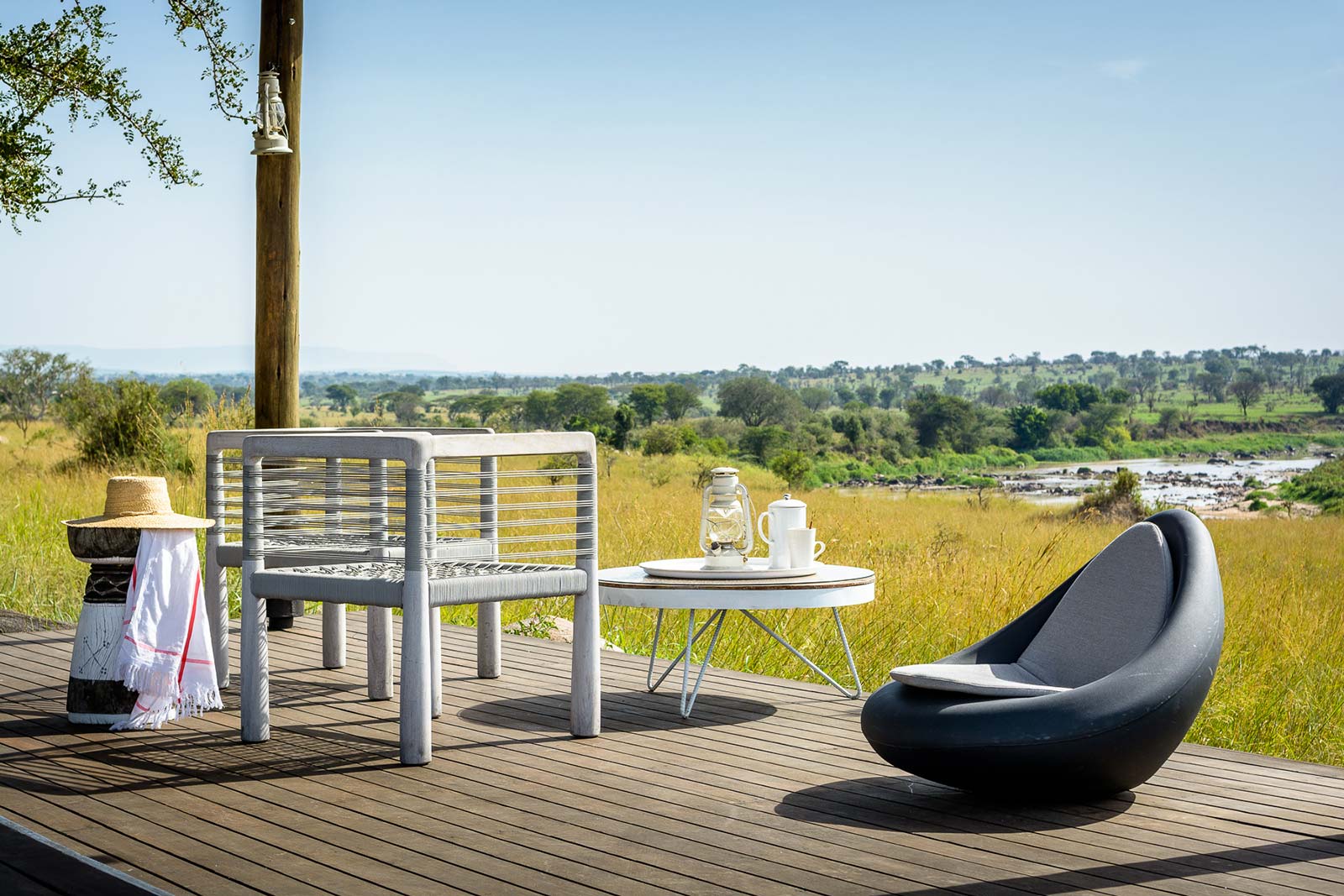
The camp occupies what locals call “crossing point zero”—one of several established wildebeest crossing points along the Mara River. This strategic position in the northernmost part of the Serengeti National Park offers uninterrupted views both upstream and downstream, providing front-row seats to the dramatic river crossings during migration season. The Lamai Triangle itself is a geographical sweet spot, sandwiched between Kenya’s Maasai Mara National Reserve and the Mara River to the south. This less-frequented corner of the Serengeti harbours impressive concentrations of resident plains game, big cats, elephants, and substantial crocodile and hippo populations. September and October are particularly rewarding months, often featuring multiple daily crossings, increased predator activity, and excellent sightings of river-dwelling species. When the migrating herds move on and the dust settles, the area transforms into a tranquil wildlife haven where keen observers can appreciate the nuanced rhythms of the savannah ecosystem.
Rooms
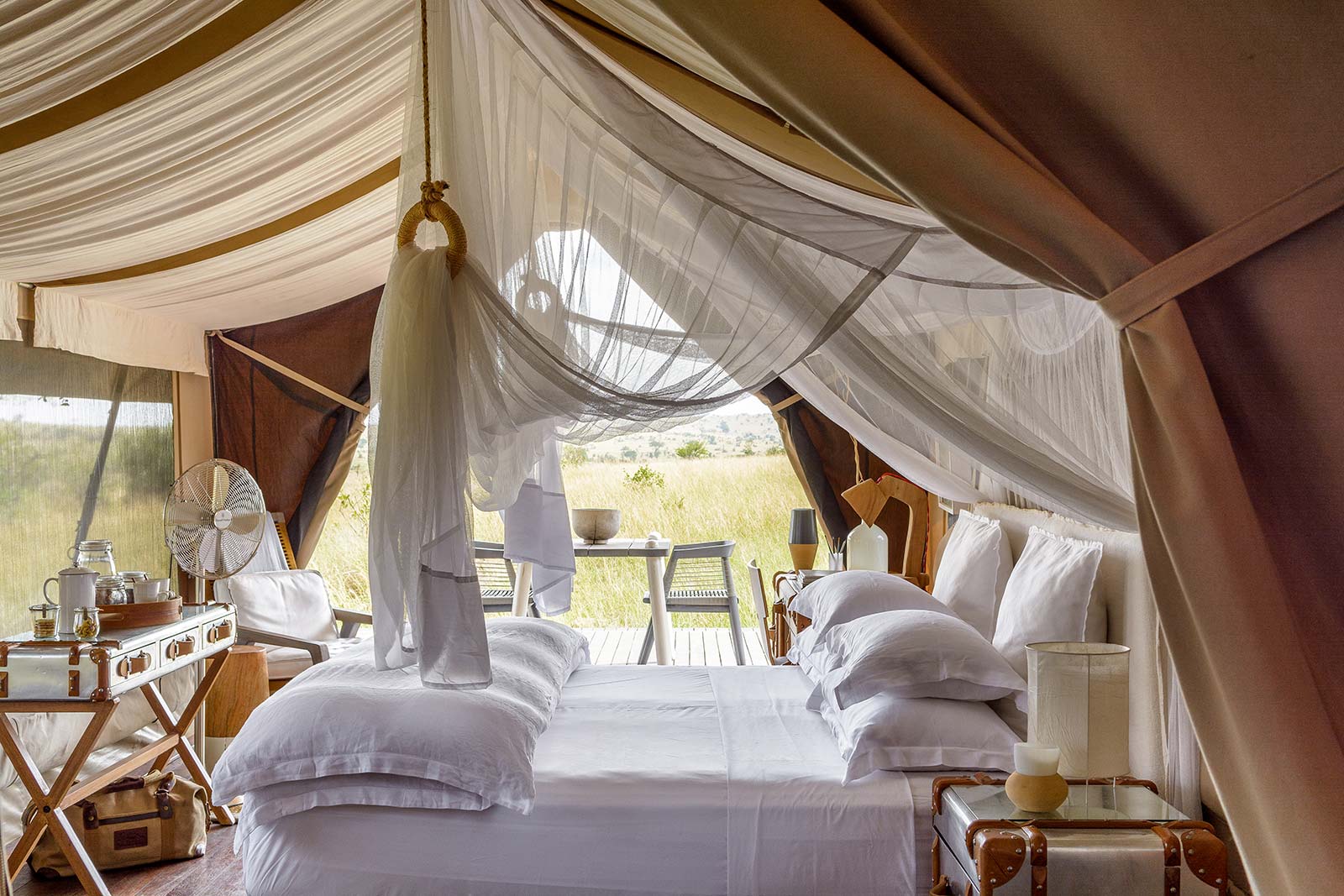
The six tented suites at Mara River are positioned far enough apart to ensure complete privacy while maximising views across the landscape. Each tent functions as a high-performing sanctuary where thoughtful design meets wilderness immersion. Extra-length king-size beds face eastward, using the rising sun as a natural alarm clock, while bathroom facilities include both indoor and outdoor showers and a secluded outdoor tub perfect for stargazing soaks. The tents showcase ingenious storage solutions—mobile safari-style modular wardrobes and hanging storage pockets that would rival most city hotel dressing rooms—alongside canvas-clad cooler boxes stocked with local beers, mixers, and homemade cordials.
Throughout the camp, African provenance is celebrated in every detail. Over twenty designers and craftspeople—many of them women—were commissioned to transform everyday objects into items of beauty through beading, sewing, carving, weaving, and metalwork. Notable contributions come from female-empowerment projects like Arusha-based Sidai Designs, which preserves traditional Maasai beading skills. The aesthetic marries playful Maasai reds, ochres, and blues with earthier tones that reflect the seasonal shifts of the surrounding grasslands.
Communal Areas
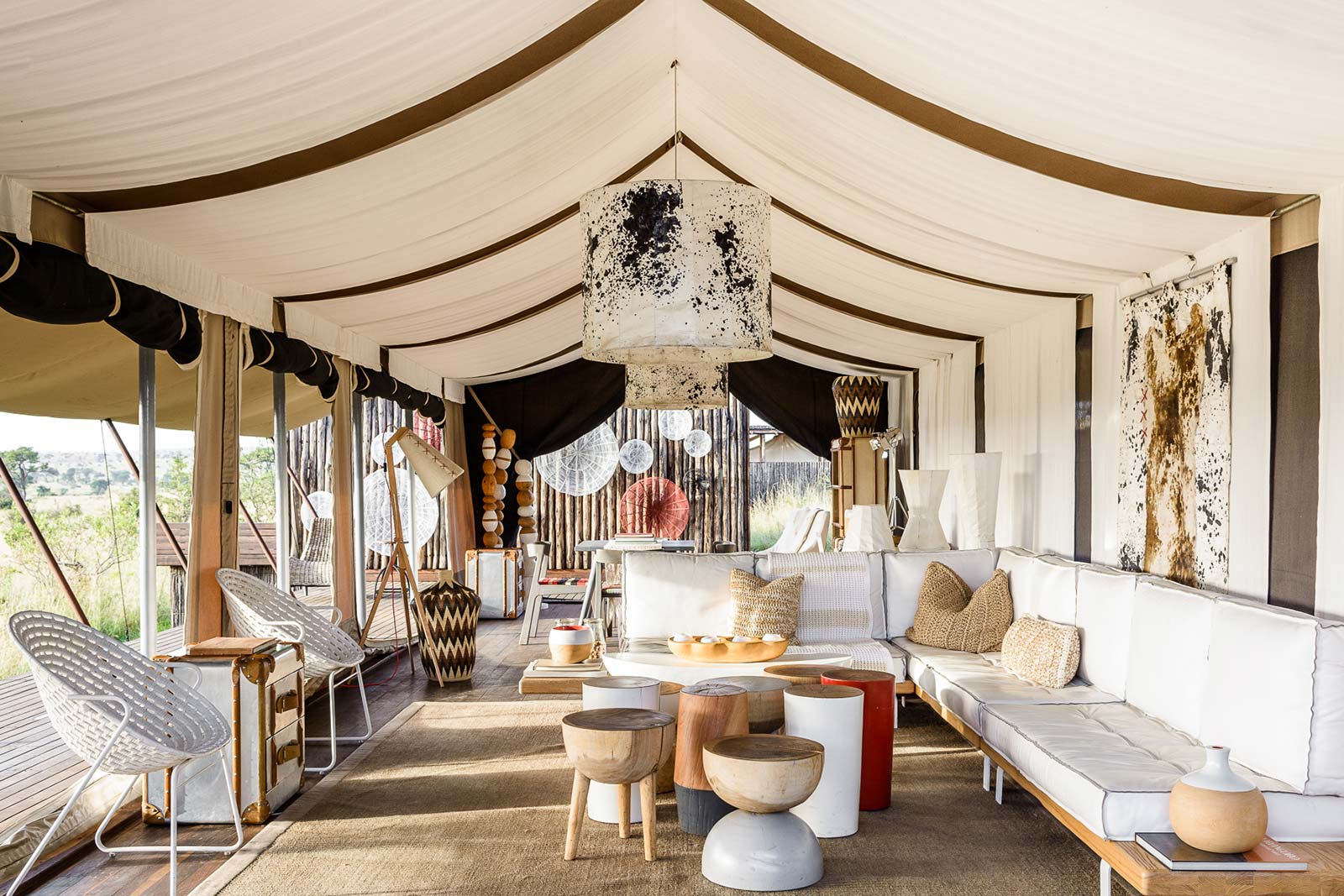
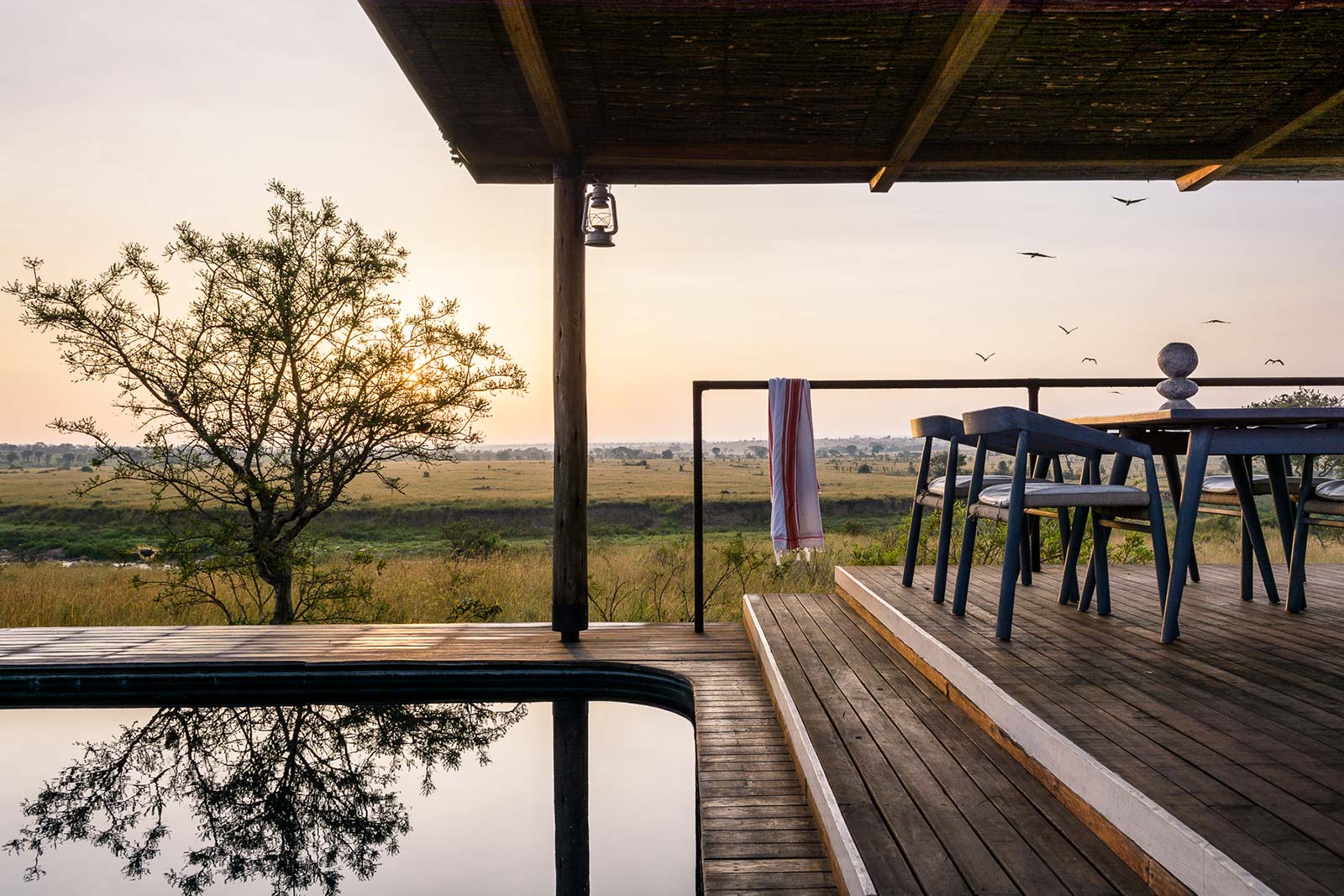
The main areas include a library, self-service deli and bar for anytime refreshments, a split-level lounge, and a secluded pool deck with a shaded sala. The overall atmosphere is modern, edgy, and light-hearted, while remaining fundamentally connected to the wilderness setting. Every element—from rope and recycled wood to canvas, poles, and zips—serves both function and form, providing everything necessary without superfluous distractions from the wild environment just beyond the canvas.
Activities
Wildlife viewing naturally forms the cornerstone of the Mara River experience. Twice-daily game drives in open vehicles provide opportunities to observe the area’s remarkable biodiversity—from the famed big cats to abundant plains game and, during migration season, the dramatic river crossings that have made this region legendary among safari enthusiasts.
The camp’s seasoned guides demonstrate deep knowledge of the ecosystem and skilled interpretation of animal behavior. Vehicle numbers are strictly limited, ensuring encounters remain intimate and unobtrusive. Between drives, guests can engage with the landscape in various ways. The camp offers wellness treatments that can be arranged in-suite or on private decks, while yoga and meditation sessions provide opportunities for reflection in inspiring settings.
Evening activities might include stargazing sessions beneath the remarkably clear African skies or wine tastings led by knowledgeable staff who guide guests through Singita’s thoughtfully curated selection. Families appreciate the Mini Game Rangers’ Course, which engages younger guests with age-appropriate wilderness activities and educational materials.
Fully inclusive
When to go
Find out when is best to visit
- Excellent
- Good
- Poor
‘SHOULDER’ DRY SEASON
A brief dry interlude before the long rains. The Great Migration takes place within the southern regions of the Serengeti ecosystem during this period.
Its proximity to the equator means that the Serengeti has very consistent temperatures throughout the year. While the high altitude (1,140 to 2,099m/3,740 to 6,886 ft) moderates these to a very pleasant 25°C/77°F to 27°C/80°F, the mornings can still be a little chilly, so be sure to bring a light fleece!
There are two wet seasons in Tanzania. The first, known as the ‘long rains’, takes place between March and May, while the milder short rains take place between November and December.
‘SHOULDER’ DRY SEASON
A brief dry interlude before the long rains. The Great Migration takes place within the southern regions of the Serengeti ecosystem during this period.
Its proximity to the equator means that the Serengeti has very consistent temperatures throughout the year. While the high altitude (1,140 to 2,099m/3,740 to 6,886 ft) moderates these to a very pleasant 25°C/77°F to 27°C/80°F, the mornings can still be a little chilly, so be sure to bring a light fleece!
There are two wet seasons in Tanzania. The first, known as the ‘long rains’, takes place between March and May, while the milder short rains take place between November and December.
WET SEASON - 'LONG RAINS'
The beginning and end of the rains varies each year, but generally, this period is the wettest time of the year. Travel to and from lodges is potentially difficult at times. This wet season is often characterised by overcast skies and consecutive days of rain. During this period the Great Migration starts to make its way north towards the Western Corridor of the Serengeti ecosystem.
Its proximity to the equator means that the Serengeti has very consistent temperatures throughout the year. While the high altitude (1,140 to 2,099m/3,740 to 6,886 ft) moderates these to a very pleasant 25°C/77°F to 27°C/80°F, the mornings can still be a little chilly, so be sure to bring a light fleece!
There are two wet seasons in Tanzania. The first, known as the ‘long rains’, takes place between March and May, while the milder short rains take place between November and December.
WET SEASON - 'LONG RAINS'
The beginning and end of the rains varies each year, but generally, this period is the wettest time of the year. Travel to and from lodges is potentially difficult at times. This wet season is often characterised by overcast skies and consecutive days of rain. During this period the Great Migration starts to make its way north towards the Western Corridor of the Serengeti ecosystem.
Its proximity to the equator means that the Serengeti has very consistent temperatures throughout the year. While the high altitude (1,140 to 2,099m/3,740 to 6,886 ft) moderates these to a very pleasant 25°C/77°F to 27°C/80°F, the mornings can still be a little chilly, so be sure to bring a light fleece!
There are two wet seasons in Tanzania. The first, known as the ‘long rains’, takes place between March and May, while the milder short rains take place between November and December.
WET SEASON - 'LONG RAINS'
The beginning and end of the rains varies each year, but generally, this period is the wettest time of the year. Travel to and from lodges is potentially difficult at times. This wet season is often characterised by overcast skies and consecutive days of rain. During this period the Great Migration starts to make its way north towards the Western Corridor of the Serengeti ecosystem.
Its proximity to the equator means that the Serengeti has very consistent temperatures throughout the year. While the high altitude (1,140 to 2,099m/3,740 to 6,886 ft) moderates these to a very pleasant 25°C/77°F to 27°C/80°F, the mornings can still be a little chilly, so be sure to bring a light fleece!
There are two wet seasons in Tanzania. The first, known as the ‘long rains’, takes place between March and May, while the milder short rains take place between November and December.
'MAIN' DRY SEASON
A more stable and predictable time of the year, usually with clear skies. During this period the Great Migration will gradually move into the Lamai region of the Serengeti (the northernmost point), as well as the Masai Mara in Kenya.
Its proximity to the equator means that the Serengeti has very consistent temperatures throughout the year. While the high altitude (1,140 to 2,099m/3,740 to 6,886 ft) moderates these to a very pleasant 25°C/77°F to 27°C/80°F, the mornings can still be a little chilly, so be sure to bring a light fleece!
There are two wet seasons in Tanzania. The first, known as the ‘long rains’, takes place between March and May, while the milder short rains take place between November and December.
'MAIN' DRY SEASON
A more stable and predictable time of the year, usually with clear skies. During this period the Great Migration will gradually move into the Lamai region of the Serengeti (the northernmost point), as well as the Masai Mara in Kenya.
Its proximity to the equator means that the Serengeti has very consistent temperatures throughout the year. While the high altitude (1,140 to 2,099m/3,740 to 6,886 ft) moderates these to a very pleasant 25°C/77°F to 27°C/80°F, the mornings can still be a little chilly, so be sure to bring a light fleece!
There are two wet seasons in Tanzania. The first, known as the ‘long rains’, takes place between March and May, while the milder short rains take place between November and December.
'MAIN' DRY SEASON
A more stable and predictable time of the year, usually with clear skies. During this period the Great Migration will gradually move into the Lamai region of the Serengeti (the northernmost point), as well as the Masai Mara in Kenya.
Its proximity to the equator means that the Serengeti has very consistent temperatures throughout the year. While the high altitude (1,140 to 2,099m/3,740 to 6,886 ft) moderates these to a very pleasant 25°C/77°F to 27°C/80°F, the mornings can still be a little chilly, so be sure to bring a light fleece!
There are two wet seasons in Tanzania. The first, known as the ‘long rains’, takes place between March and May, while the milder short rains take place between November and December.
'MAIN' DRY SEASON
A more stable and predictable time of the year, usually with clear skies. During this period the Great Migration will gradually move into the Lamai region of the Serengeti (the northernmost point), as well as the Masai Mara in Kenya.
Its proximity to the equator means that the Serengeti has very consistent temperatures throughout the year. While the high altitude (1,140 to 2,099m/3,740 to 6,886 ft) moderates these to a very pleasant 25°C/77°F to 27°C/80°F, the mornings can still be a little chilly, so be sure to bring a light fleece!
There are two wet seasons in Tanzania. The first, known as the ‘long rains’, takes place between March and May, while the milder short rains take place between November and December.
'MAIN' DRY SEASON
A more stable and predictable time of the year, usually with clear skies. During this period the Great Migration will gradually move into the Lamai region of the Serengeti (the northernmost point), as well as the Masai Mara in Kenya.
Its proximity to the equator means that the Serengeti has very consistent temperatures throughout the year. While the high altitude (1,140 to 2,099m/3,740 to 6,886 ft) moderates these to a very pleasant 25°C/77°F to 27°C/80°F, the mornings can still be a little chilly, so be sure to bring a light fleece!
There are two wet seasons in Tanzania. The first, known as the ‘long rains’, takes place between March and May, while the milder short rains take place between November and December.
WET SEASON - 'SHORT' RAINS
Weather in this season can be rather unpredictable, with sunshine interspersed with occasional heavy showers and thunderstorms. Though still considered the wet season, the rains are not as intense during this period as during the long rains. November can therefore still be a great time to visit.
The Great Migration will start moving back towards the Southern Plains of the Serengeti from the Masai Mara. Given the distance involved, we tend to see a more fragmented movement of wildlife.
Its proximity to the equator means that the Serengeti has very consistent temperatures throughout the year. While the high altitude (1,140 to 2,099m/3,740 to 6,886 ft) moderates these to a very pleasant 25°C/77°F to 27°C/80°F, the mornings can still be a little chilly, so be sure to bring a light fleece!
There are two wet seasons in Tanzania. The first, known as the ‘long rains’, takes place between March and May, while the milder short rains take place between November and December.
WET SEASON - 'SHORT' RAINS
Weather in this season can be rather unpredictable, with sunshine interspersed with occasional heavy showers and thunderstorms. Though still considered the wet season, the rains are not as intense during this period as during the long rains. November can therefore still be a great time to visit.
The Great Migration will start moving back towards the Southern Plains of the Serengeti from the Masai Mara. Given the distance involved, we tend to see a more fragmented movement of wildlife.
Its proximity to the equator means that the Serengeti has very consistent temperatures throughout the year. While the high altitude (1,140 to 2,099m/3,740 to 6,886 ft) moderates these to a very pleasant 25°C/77°F to 27°C/80°F, the mornings can still be a little chilly, so be sure to bring a light fleece!
There are two wet seasons in Tanzania. The first, known as the ‘long rains’, takes place between March and May, while the milder short rains take place between November and December.
Explore The Serengeti Properties
-
Chaka Camp
Chaka Camp
Follow the great migration through the Serengeti with this authentic and comfortable mobile camp. Moving seasonally, Chaka Camp remains in the heart of the Serengeti ..
-
Klein’s Camp
Klein’s Camp
Klein’s Camp is a simple, unpretentious yet remarkably conformable place to spend your time. It is, however, the attention to detail and customer service that &Beyond ..

-
Lamai Serengeti
Lamai Serengeti
Often considered Nomad Tanzania’s premier property and with good reason, Lamai Serengeti is one property we find hard to fault. The lodge design, location, service and ..
-
Lemala Kuria Hills Lodge
Lemala Kuria Hills Lodge
Lemala Kuria Hills offers modern, luxurious, hotel-like accommodation for travellers hoping to witness the migration. Far from being bush living, its clean lines and ..
-
Mara Mara Tented Lodge
Mara Mara Tented Lodge
A modern, clean-lined tented camp with a traditional African feel, Mara Mara Tented Lodge has one of the Serengeti’s most coveted locations. Just a short drive takes ..
-
Namiri Plains Camp
Namiri Plains Camp
Namiri Plains Camp, this intimate little camp sits in a remote, game-rich location renowned for its extraordinary cheetah and lion populations. Offering classic Serengeti ..
-
Nyikani Central Camp
Nyikani Central Camp
Sister camp to Nyikani Migration Camp, Nyimani Camp Central Serengeti offers good value and a real sense of adventure. A great property that epitomises the adventure of ..
-
Nyikani Migration Camp
Nyikani Migration Camp
Those who know little about the bush are still likely to have heard of the Serengeti and its annual Great Migration. It's a dramatic, often televised event, and Nyikani ..
-
Olakira Migration Camp
Olakira Migration Camp
Olakira Camp, an Asilia Africa property, is a mobile tented camp situated within Tanzania’s Serengeti National Park. Renowned for its adaptive approach to seasonal ..
-
Sanctuary Kichakani Serengeti Camp
Sanctuary Kichakani Serengeti Camp
Sanctuary Kichakani Serengeti Camp is a well-priced addition to the Tanzania Sanctuary Collection offers a true taste of the mobile safari experience without compromising ..
-
Sayari Camp
Sayari Camp
A remote camp in the north of the Serengeti, Sayari Camp is the perfect spot to witness the Great Migration. With plenty of stylish space to relax in, an infinity pool ..
-
Serengeti Kati Kati Tented Camp
Serengeti Kati Kati Tented Camp
A simple tented camp in the heart of the Serengeti, Kati Kati Tented Camp offers a rustic safari adventure with prime game viewing, a quaint and wild setting and plenty ..
-
Serengeti North Wilderness Camp
Serengeti North Wilderness Camp
Operated by the reputable Wild Frontiers, known for its array of properties across East Africa, particularly in Uganda, Serengeti North Wilderness Camp is a seasonal ..
-
Serengeti Safari Camp
Serengeti Safari Camp
This classic mobile tented camp was the first of its kind in the Serengeti, and while many imitations have sprung up since, Nomad Serengeti Safari Camp remains one of if ..
-
Serengeti Under Canvas
Serengeti Under Canvas
Serengeti Under Canvas offers an immersive camping experience within the wildlife-rich Serengeti plains, softened by the luxurious comfort of its deluxe tents. These two ..
-
Serengeti Wilderness Camp
Serengeti Wilderness Camp
Located in the heart of the Serengeti, in a pristine area that offers unparalleled game viewing, Serengeti Wilderness Camp is open all year round, and is located to the ..
-
Serian’s Serengeti Lamai
Serian’s Serengeti Lamai
Serian Serengeti North is exactly what a safari camp should be. Alex has spent a lifetime in the east African bush and knows it like the back of his hand. It is this ..
-
Singita Faru Faru
Singita Faru Faru
Singita Faru Faru is a luxurious, contemporary property in the heart of the game-rich Singita Grumeti Reserves would not look out of place in an interior design ..

-
Singita Sabora Tented Camp
Singita Sabora Tented Camp
Belonging to the Singita range, which holds by far the most impressive collection of luxury safari lodges in Africa, Sabora brings its own brand of polished 1920s-style ..
-
Singita Sasakwa Lodge
Singita Sasakwa Lodge
Travellers looking to forgo rustic tents for something more sophisticated should look no further than Sasakwa Lodge. Bringing together two parallel worlds – the ..
